


This is an English translation of my essay, originally posted in Japanese on January 27, 2026.
Ayurveda is the traditional medicine of India. For years, I’ve found myself drawn to various natural remedies, trying one after another whenever the mood struck.
India holds a special place in my life; my husband and I have visited the country many times. Even the Sun Salutation in my daily yoga has been a routine for about four years now.
Bringing Ayurveda into my daily life seemed like the most natural thing in the world. Yet, I had never once tried to truly study it.
It wasn’t that I didn’t know about Ayurveda; I simply chose not to look closer. Deep down, I felt a strange disconnect with the “Doshas,” the three mind-body types.
I assumed it just didn’t apply to Japanese people, and twenty years quietly slipped away under that assumption. It was only last spring that I realized just how shallow my thinking had been.

Ayurveda is the world’s oldest traditional medicine. It’s far from a simplistic tool that merely divides human beings into three neat categories and dictates what you can or cannot eat. Once you touch its true depth, there is no turning back.
…Having said that, I haven’t actually touched that depth yet. Let me confess: I haven’t really studied Ayurveda at all. I am a complete beginner.
By pure chance, I was able to shake off the strange disconnect I had been holding onto. The moment I did, Ayurveda became a guiding light in my life, feeling entirely natural.
I started gathering information through YouTube and various websites. I also picked up an introductory book and read it in one sitting—it was filled with practical recipes and incredibly helpful.
Since then, I’ve been flipping back through its pages, putting its wisdom into practice. Ayurveda has seamlessly woven itself into my daily mindset.
You will rarely find traditional Japanese curry rice on our dinner table. (Unlike the spiced, lighter curries of South Asia, Japanese curry is known for its thick, rich, and comforting, slightly sweet sauce made from a flour-based roux.) Instead, our home-cooked meal is always a vibrant spice curry.
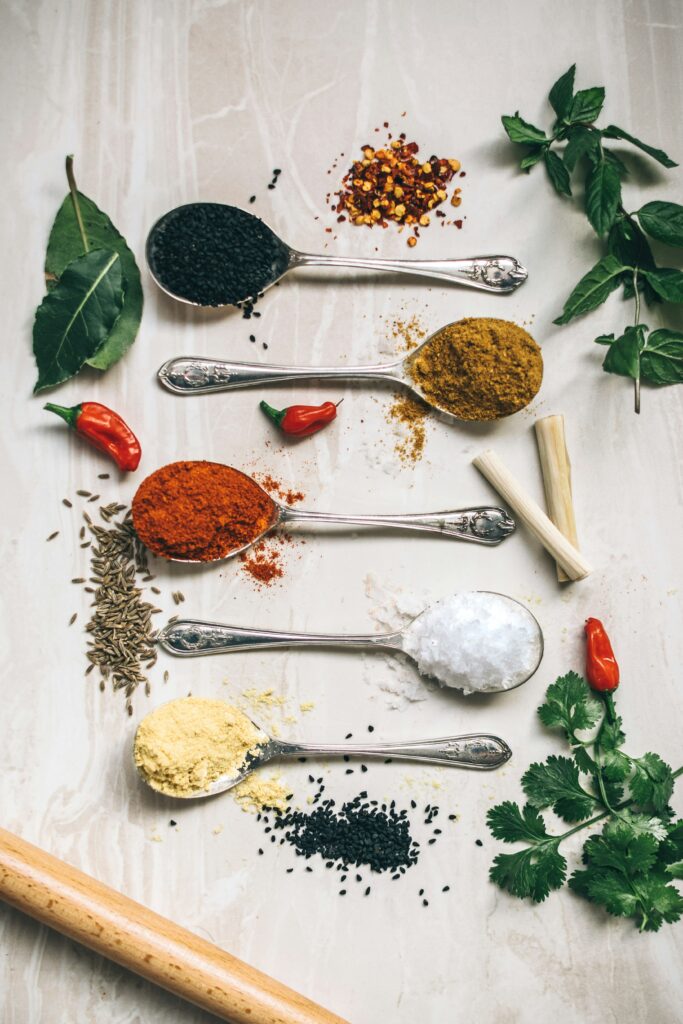
It’s the kind of curry that instantly transports you to India, Nepal, or Sri Lanka. In fact, spices like cumin and coriander have far outpaced traditional Japanese seasonings like sake and mirin in my kitchen; I now use them every single day. My love for India meant that spices always felt like a natural part of my life.
Since falling in love with Ayurveda, making CCF tea has become my daily ritual. CCF stands for Cumin, Coriander, and Fennel.
It’s a tea that suits everyone, incredibly easy to drink, and I never tire of it. It has been gently soothing my digestion.
I also love to brew Ajwain tea at dinner. I adore bean and lentil dishes, but they can often leave me feeling bloated. This tea is a lifesaver because it calms my stomach.
The only catch? It has a very distinct, punchy aroma. My husband is definitely not a fan.
In another small changing of the guard, my trusty tongue brush was replaced by an authentic copper tongue scraper from India. I feel like there were a few other things I tried, though some were quickly dismissed. Perhaps my life isn’t quite as “100% Ayurvedic” as I think. But who knows? Its presence might grow over time. For now, I’m still in the middle of exploring.
That said, there is one particular Ayurvedic teaching that catches my eye, yet I just can’t bring myself to try: Dinacharya. This is the ultimate guide to an ideal daily routine, and let me tell you, it is intimidating. To a casual fan like me, it feels almost impossible.
And yet, I can’t stop thinking about it. Deep down, I am an absolute sucker for daily routines, and I am utterly obsessed with anything related to lifestyle and health. I simply cannot resist this kind of talk.

The 48-minute window that starts 96 minutes before sunrise is called Brahma Muhurta—the most sacred time of the day. I recently looked up the sunrise times for my area. On January 31st, the sun rises at 6:46 AM, which means Brahma Muhurta falls between 5:10 AM and 5:58 AM.
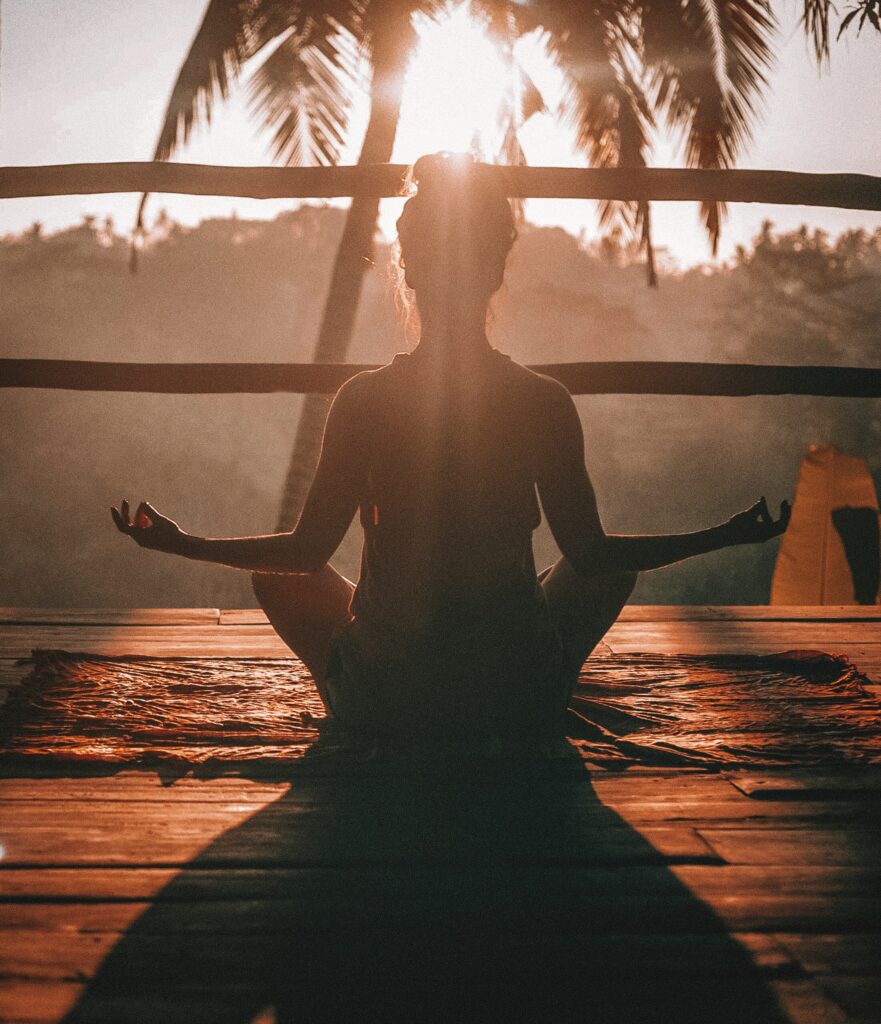
They say this sacred window is the perfect time for meditation. Waking up at 5:10, getting ready, sipping warm water, and meditating for about twenty minutes… I absolutely romanticize that kind of morning. So, why not just do it? Yet, a shadow of doubt creeps in: Will I become sleep-deprived? Am I going to ruin my health instead?
Even if I wanted to go to bed earlier, my current 10:00 PM bedtime feels like my absolute limit. If I could actually fall asleep by 10, waking up at 5 with seven hours of sleep shouldn’t be that hard. And yet, my mind starts to panic:
“I want to sleep for eight hours! No, nine! I need at least seven and a half hours, or I won’t survive the day!”
Every health guru out there recommends eight hours of sleep. I also heard somewhere that if you don’t get at least six and a half hours, your brain can’t clear out its daily waste. Sacrificing my health just for the sake of Brahma Muhurta feels completely counterproductive. Yet, Ayurveda actively encourages this early wake-up call.
Apparently, the optimal sleep duration depends on your Dosha. Vata needs eight hours, Pitta needs seven, and Kapha requires the shortest—just six hours. Does Kapha’s brain simply clean itself faster? Which is funny, considering they are known for being the slow and steady types.

Of course, if meditating during Brahma Muhurta allows you to absorb sacred energy, it probably more than makes up for a little less sleep. In fact, the rewards must far outweigh the loss—a wonderful, net-positive blessing. But I wonder… will the god of Brahma Muhurta still smile upon someone as calculating as me?
I also couldn’t help but wonder what time this window falls in the summer. So, I looked up the sunrise for the summer solstice. It’s 4:26 AM. That means Brahma Muhurta would be between 2:50 AM and 3:38 AM. Before 3 AM? Yeah, I give up.
Unless I go to bed before 8:00 PM, I wouldn’t even get seven hours of sleep. If I stick to my usual 10:00 PM bedtime, I wouldn’t even get five hours. It’s just not enough sleep. No matter how magnificent the blessings are, my body and brain would completely crash. Just thinking about it makes my head spin.
Why not just stop overthinking and give it a try for now? Let’s try waking up at 5:00 AM. To be honest, around that time, there are already plenty of days when I naturally open my eyes, even if I don’t actually get out of bed. Alright, starting tomorrow, 5:00 AM it is!
…Or so I say, but my mind is still hesitating. I just can’t shake the desperate desire to sleep for one more hour. What if I went to bed at 9:00 PM instead? That shouldn’t be impossible, right?
Wait, hold on. I need to remember that I don’t live alone. If I go to sleep at 9:00 PM, it means completely altering my evening-to-bedtime lifestyle. And that, of course, would ripple into my husband’s routine as well. Finding a balance between my personal rhythm and our rhythm as a couple is absolutely essential. Yeah, going to bed at 9 is going to be tough after all.
Is this a compromise? No, it’s not. Following Dinacharya and living in perfect harmony with nature isn’t my only ideal. Living in harmony with my husband is far more important. After all, my true happiness comes from sharing a joyful life together as a couple.
A life tailored around my husband—that is my ultimate ideal, and the most cherished guiding light in designing my lifestyle. A home always filled with our laughter is my top priority, and I have no intention of changing that. So, does that mean my journey with Ayurveda ends here? Absolutely not. I’m sure there are still plenty of things I can do.